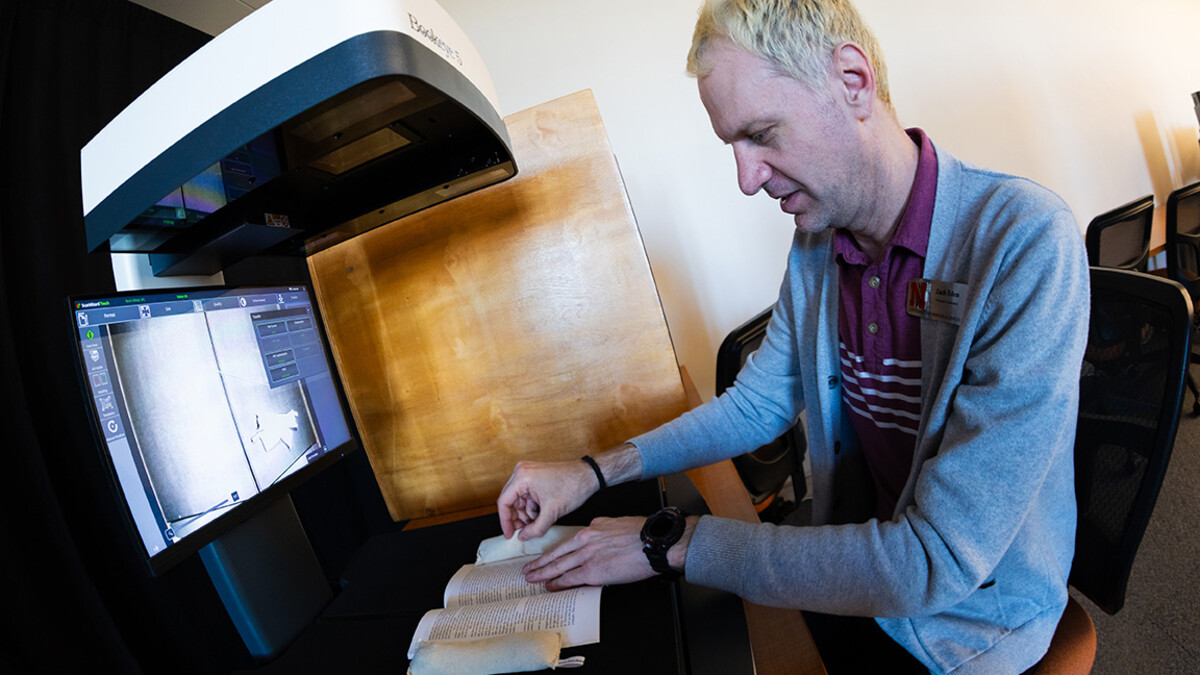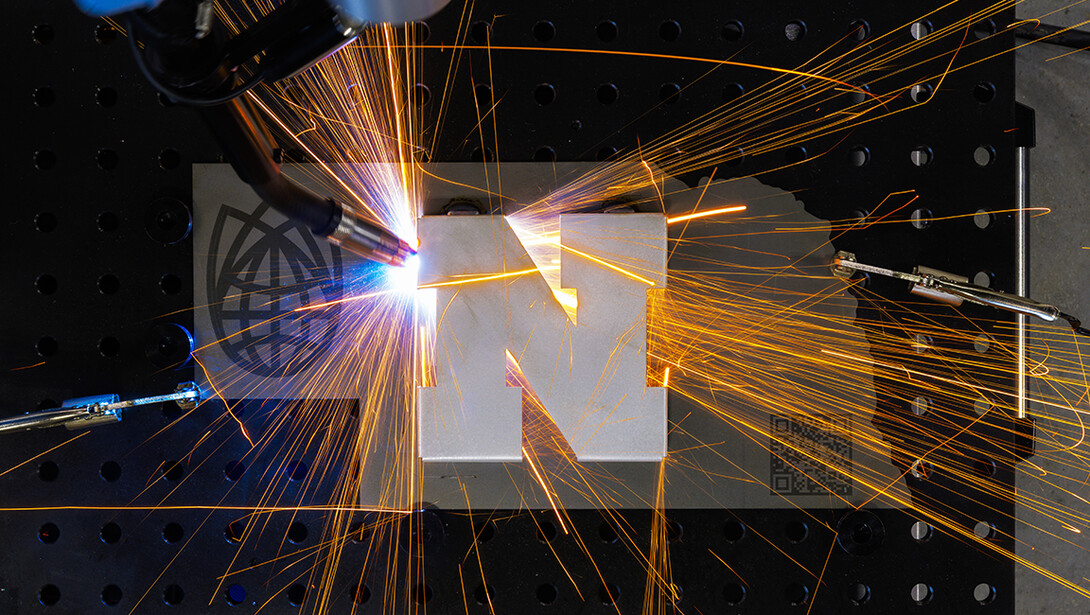
Nebraska Innovation Studio announced the 2026 cohort of Innovation Fellows Jan. 13. The fellows, chosen from more than 50 applicants, will bring big ideas in medicine, agriculture and cybersecurity to reality through the program.
Fellows receive five months of free membership at Innovation Studio, a $2,500 material stipend and a $1,500 in professional services credit with the Frontier Tech Lab, a university design and prototyping service center based in the studio.
“We’re thrilled with the four fellows," said David Martin, director of Nebraska Innovation Studio. "They have incredibly innovative, well-thought-out ideas for assisting surgeons in delicate surgery, facilitating secure military communications and advancing agricultural research.”
The 2026 fellows are:
Bill Berzonsky — Founder of AgSolaire LLC, Berzonsky is developing a "smart" seed thresher. Berzonsky plans to use robotics and a Near Infrared camera over top of the threshed seed to acquire moisture and protein content data. A crop scientist with more than 30 years of experience, Berzonsky received his doctorate in genetics and plant breeding from the University of Missouri-Columbia. Berzonsky founded AgSolaire in 2023 with the goal of bringing research-grade tools — and renewable energy — to crop research programs and farms. Toward that end, he has received a prototype grant from the Nebraska Department of Economic Development and completed entrepreneurship programs including the UNL I-Corps Workshop and Doane University’s “Go for Launch.” Berzonsky is also an adjunct assistant professor in the Department of Agronomy and Horticulture.
Jon Turkus — Turkus, a high-throughput molecular biology technician and research manager for the Schnable Lab at the University of Nebraska–Lincoln, has conceptualized a high-throughput device for rapid sampling of plant seedlings for use in downstream genetic analyses. He also plans to use the fellowship to finalize his design and build a prototype. In 2024, Turkus developed a sampling protocol that enabled the collection of 2,400 tissue samples in under two hours using a custom spill-proof tray system he designed and built at Nebraska Innovation Studio. Turkus was also a co-author on The Plant Journal’s Research Article of the Year.
Dr. James Willcockson — A hand and wrist surgeon at the University of Nebraska Medical Center, Wilcockson aims to improve the way surgeons measure blood flow during delicate procedures. He has designed a smaller, more reliable Doppler device to test whether blood is flowing through tiny blood vessels. He plans to use the fellowship to create a functional prototype. A Nebraska native, Willcockson received his undergraduate degree at the University of Nebraska–Lincoln and completed his medical degree at UNMC. Following medical school, he completed an integrated plastic surgery residency program at the University of Utah and a hand surgery fellowship at the Medical College of Wisconsin. He is an assistant professor of surgery in the division of plastic and reconstructive surgery at UNMC.
Chris Wong — Wong recently retired from the U.S. Air Force, where his career focused on communications and cybersecurity. He launched Inscribe Technologies to build an advanced, military-grade cryptographic mesh network that enables secure, resilient communications tailored explicitly for tactical comms, drones and autonomous systems. He plans to use the fellowship's resources to build prototypes of a soon-to-be-patented modular drone chassis design and various military specification case designs for the advanced cryptographic radio used in the mesh network. During his 20-year Air Force career, Wong served as chief of operations with U.S. Strategic Command’s Cyber Operations Integrated Planning Element and commander of the 55th Cyberspace Squadron. He is the CEO of Inscribe Technologies and serves as the director of advanced IT and infrastructure for Nebraska Defense Research Corporation, a nonprofit organization affiliated with the University of Nebraska that connects government, industry and academia to accelerate defense technology transfer
New this year is the credit allowing the fellows to tap design and prototyping help through the Frontier Tech Lab, which launched in October 2025.
“We’re excited to give these innovators a boost with the expertise we have at the Frontier Tech Lab,” said Isaac Regier, the lab's design coordinator. “Providing prototyping support from our team allows people from any background to actualize their concepts faster and more effectively than was previously possible in the state.”
This is the second year of the fellowship, which was started under a Build Back Better Regional Challenge grant from the U.S. Economic Development Administration. It is now funded through private donations. Tax-deductible donations to help fund the fellowship can be made through the University of Nebraska Foundation.
In addition to the material support, fellows will receive help from a roster of mentors with expertise in starting businesses, entrepreneurship, manufacturing, business development robotics and more.
“For the second year in a row, we were blown away by the quality of the applications we received,” Martin said. “It showed us just how many creative, talented and innovative people we have in Nebraska looking for opportunities to bring their ideas to life.”