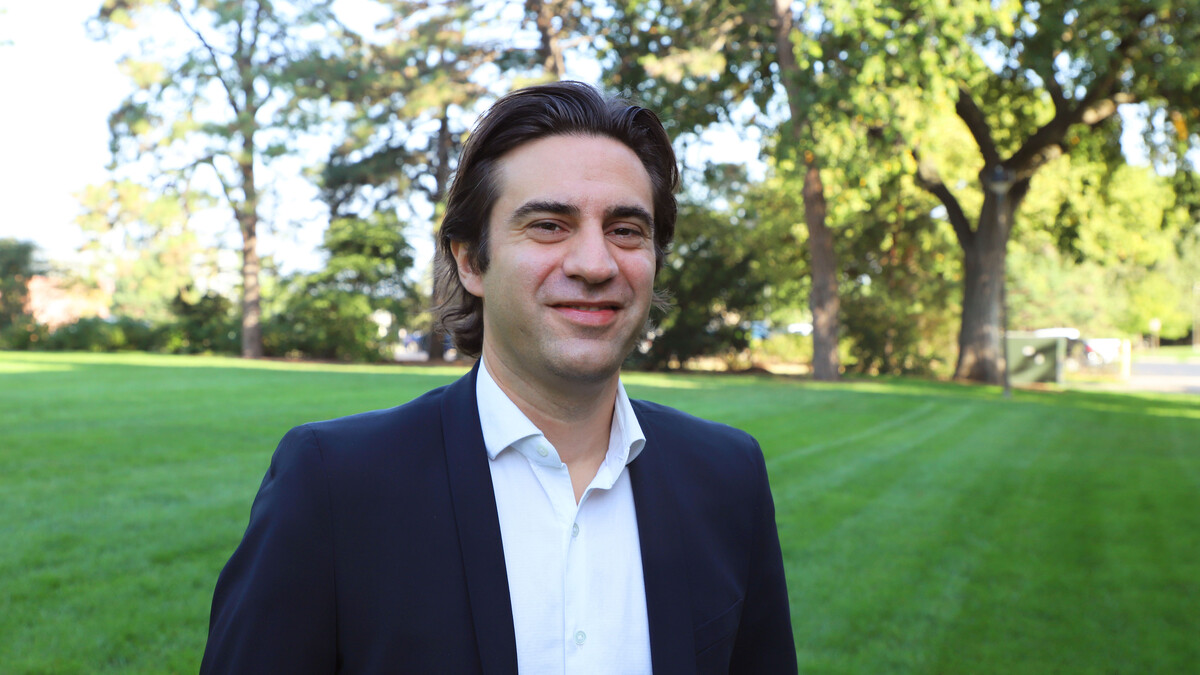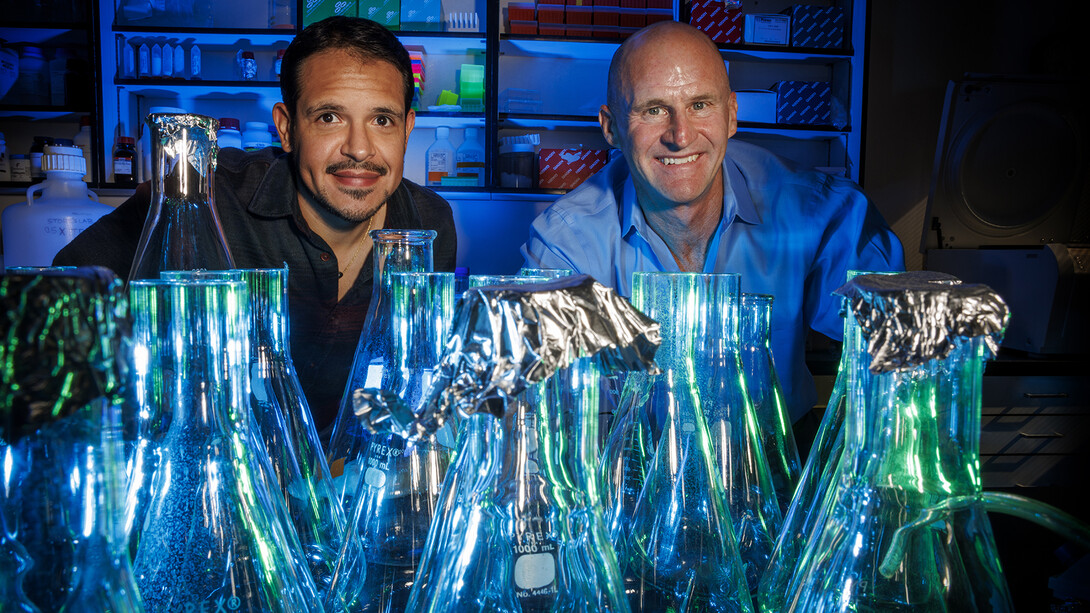
Nebraska’s Jay Storz is taking his research to new heights with a Fulbright Scholar Award, sending him to the high Andes in Argentina to expand research into how animals survive extreme elevations.
Storz, Willa Cather Professor in the University of Nebraska–Lincoln’s School of Biological Sciences, will spend January through April in Argentina, collaborating with researchers at the Instituto Argentino de Investigaciones de Zonas Áridas. The institute, part of Argentina’s national research system, focuses on desert ecology and environmental science.
Storz will collaborate with Paola Sassi, a physiologist and ecophysiology expert with the institute. The project will examine how animals adapt to extreme environments, particularly low-oxygen conditions at high elevations in the Andes.
The research centers on the Andean leaf-eared mouse, a species that holds the record as the world’s highest-dwelling mammal. Storz and his collaborators have documented populations living at elevations above 6,000 meters, including sites on volcanic peaks in the Andes where oxygen levels are less than half those at sea level.
The Fulbright project will combine fieldwork in the mountains with laboratory-based physiological experiments in Mendoza, Argentina. Researchers will collect mice across a broad elevational range and measure how their bodies respond to progressively lower oxygen levels designed to simulate ascent from sea level to 7,000 meters.
Storz said the work builds on long-running research supported by the National Science Foundation and the National Institutes of Health. The study is designed to tease apart the roles of genetic adaptation and physiological plasticity in helping animals survive extreme environments.
“Basically, we’re trying to understand how animals are able to cope with oxygen deprivation at the limits of where mammals can live,” he said.
In addition to research, Storz will teach a graduate seminar in evolutionary physiology at the institute and the Universidad Nacional de Cuyo.
The Fulbright experience also will help strengthen what has become a growing international research network for Storz, who has long collaborated with scientists across South America. Storz said the partnership is expected to lay the groundwork for ongoing exchange opportunities between the University of Nebraska–Lincoln and the Argentine research institute, including future student and researcher exchanges between the two institutions.
He said the Argentina-based partnership comes at a key moment as fieldwork expands and new grant proposals build toward broader studies of how species adapt to environmental stress across elevation gradients.
“We’re able to bring together complementary expertise — evolutionary genetics and physiological ecology — to get at the mechanisms behind adaptation,” he said.
Storz previously held a Fulbright in Argentina in 2019, an experience he said helped shape his current research collaborations and deepened his connection to the region.
Beyond the science, he said the opportunity reflects a broader goal of the Fulbright program: building long-term international partnerships and cultural exchange.
“I’m excited about this opportunity to spend a sustained period of time in Argentina working with these colleagues,” Storz said. “It will allow us to strengthen an ongoing collaboration, combine our complementary expertise and build something that can continue well beyond the Fulbright.”
Share
News Release Contact(s)
Tags
High Resolution Photos
HIGH RESOLUTION PHOTOS