
An ongoing effort to monitor and protect southern flying squirrels on East Campus is bringing together University of Nebraska–Lincoln student Hannah Haun and School of Natural Resources faculty through research, experiential learning and community outreach.
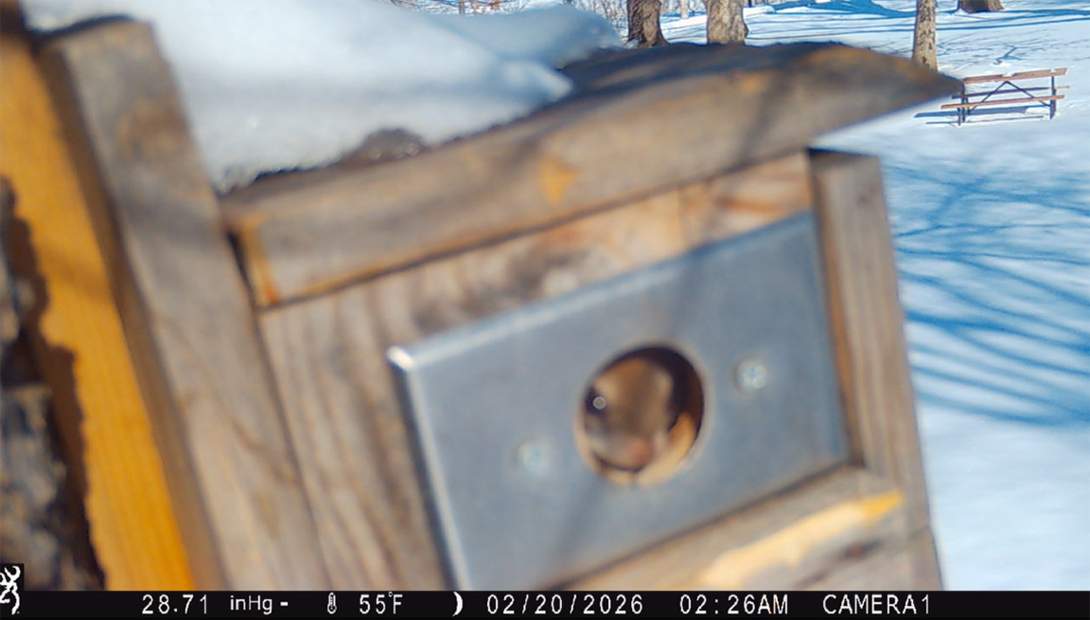
“Dr. John Carroll started building nesting boxes all around East Campus after the squirrels were first discovered. I’ve been working with him to use trail cameras to monitor and log their activity, behavior and movements,” said Haun, a senior fisheries and wildlife major. “This is a threatened species of squirrel, so it’s pretty cool that they’ve made a habitat here on campus.”
The squirrels’ presence on East Campus isn’t random. Haun said the arboretum’s mature trees provide ideal habitat.
“These squirrels like to live in the cavities of old trees, and we have trees here that are close to 100 years old, so it makes sense that they’re really liking them,” she said.
Before joining the flying squirrel project, Haun first connected with Carroll during a study abroad experience in Botswana in summer 2025. Led by Carroll, the program immersed Haun and her peers in the region’s ecosystems, cultures and conservation methods.
“It was such an incredible experience,” Haun said. “We got to meet with local tribes, learn about their communities and understand their approaches to preserving wildlife.”
That mission — working together to protect wildlife — is driving the flying squirrel research. The presence of the rare animals has also inspired the Lincoln Flying Squirrel Squad, a group of Huskers dedicated to educating campus and nearby communities on how to protect them.
“We do a lot of outreach to educate the public about this species that a lot of people don’t know about,” Haun said. “We want people to look out for them and be mindful that the squirrels use old or dead trees that we might otherwise remove. It’s a fun way to bring the campus and community together.”