Tags
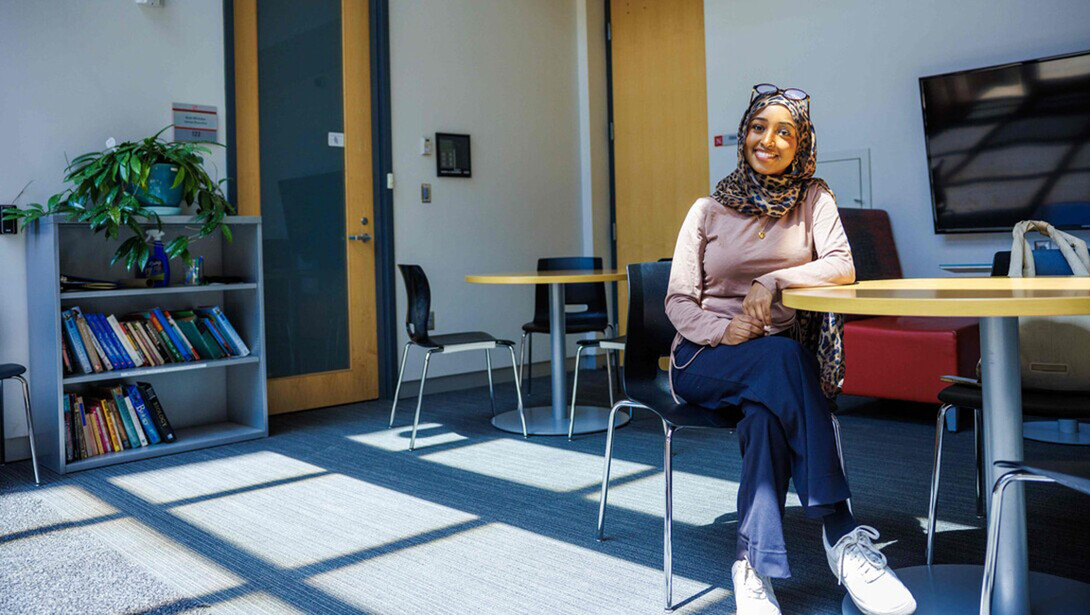
At just nine years old, Hamdiya Mumade had to go through emergency surgery. She remembers feeling terrified, but she also remembers that her fear was alleviated by the care her physician showed her and her family.
“I remember how understanding and compassionate she was with my immigrant parents. She made sure they understood every step of what was going to happen and took the time to really address all of their concerns,” Mumade said. “Even after the surgery, I remember her telling me that she went out of her way to stitch my scar in a way that would be easiest to hide, so I wouldn’t have to worry about having a visible scar on my face.”
That moment not only inspired her to pursue medicine but also showed Mumade, a rising senior biological sciences and microbiology major, that exceptional care goes beyond treating a condition. It also revealed the type of healthcare professional she wanted to be: someone who cares about a patient's dignity and humanity.
“I think one of the things our system is lacking is a stronger emphasis on the humanities side of medicine, the part that teaches you how to be empathetic and truly patient-centered,” Mumade said.
Mumade also wants to dedicate her career to addressing the major disparities in quality of care based on a person's race. She said people of color constantly receive lower-quality care, especially Black women.
“Black women are more likely to die during childbirth or have their pain dismissed or untreated. So for me, making an impact right now looks like a mix of representation and advocacy,” Mumade said. “Just being in spaces where people like me haven’t always been represented challenges norms and opens doors.”
Mumade wants to actively address the disparities in the industry and advocate for more equitable and compassionate care. That has led her to multiple experiences through her educational career that she believes will help her on that journey. The first stop? Finding the school that was right for her.
A Lincoln native, Mumade was drawn to the University of Nebraska–Lincoln thanks to on-campus opportunities and a plethora of scholarships, which gave her the freedom to explore her passions.
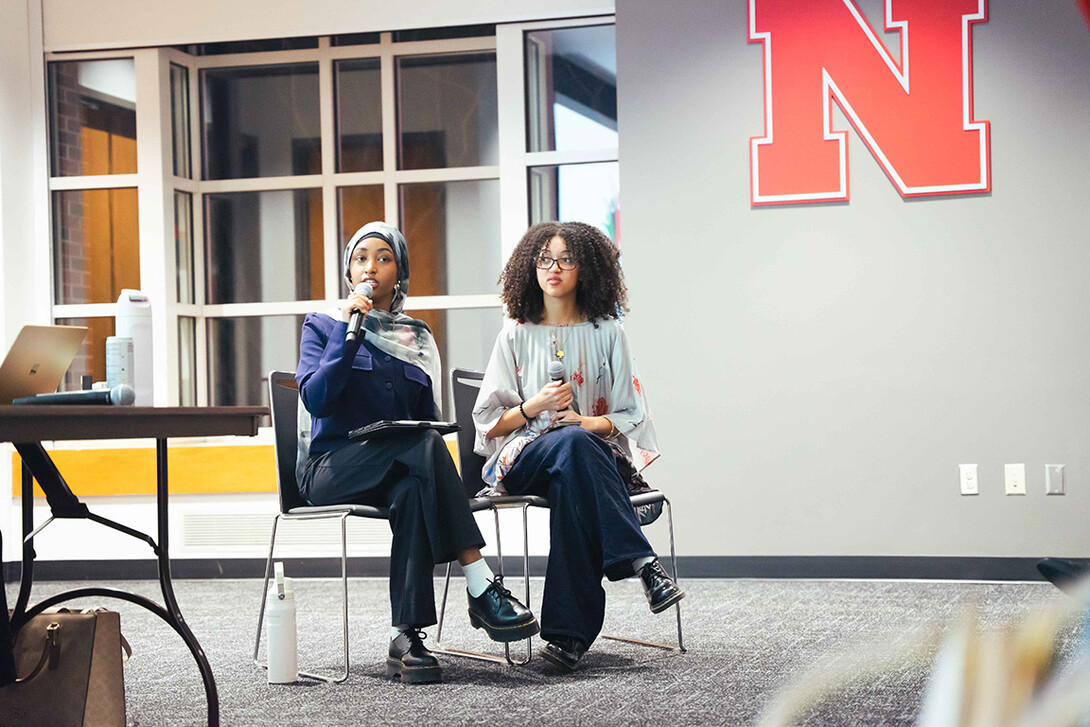
“I was able to get involved in research as early as my freshman year through STEM-Power and later FYRE (First Year Research Experience) and UCARE,” Mumade said. “Although I’ve discovered that research isn’t something I want to pursue post-grad, I’m glad I was able to experience it so that I was able to figure out what was right for me.”
Mumade also found connection in the William H. Thompson Scholars Learning Community, which she said has been a major support to her as she explores future career options. It’s also been an experience that has allowed her to share her own journey with incoming freshmen, helping them adjust to college life and feel confident in the transition.
Mumade’s extracurricular activities have further honed her clinical skills. Doctors without Borders, Clinic with a Heart and jobs at both Aviva Woodlands and Bryan Health have given her hands-on experience in the healthcare industry. It’s also where she has banked an impressive 420-plus hours of patient care experience, supporting healthcare teams and delivering high-quality care.
“In this role, my patients were either about to undergo surgery or were recovering from one, and as someone who’s fairly curious, I used every opportunity to learn,” Mumade said, describing her educational experience at Bryan Health as a Patient Care Technician. “There were a lot of surgical procedures that I started to become familiar with. And it also felt really rewarding to see my patients gradually recover, step by step, and being part of their healing journey has been incredibly fulfilling.”
Mumade's immediate goal right now is to attend physician assistant school after she graduates and work as a PA, but she has broader ambitions on the horizon.
“One of my long-term goals is to improve access to healthcare, particularly in my home country of Ethiopia. I aim to enhance health outcomes by educating the general public about basic health topics,” Mumade said. “I hope to establish a nonprofit organization dedicated to increasing healthcare access because I strongly believe that healthcare is a fundamental human right.”
As for people who are looking to go down the same pre-med or pre-health pathway, she has clear advice that has served her well.
“I would also say that a growth mindset is crucial. Being pre-med or pre-health requires taking a lot of difficult courses, and you will have ups and downs," Mumade said. "Some days you won’t do as well as you hoped on exams, but recognizing your mistakes and learning from them is what will allow you to succeed."